Dark kitchen / ghost kitchen cleaning requirements
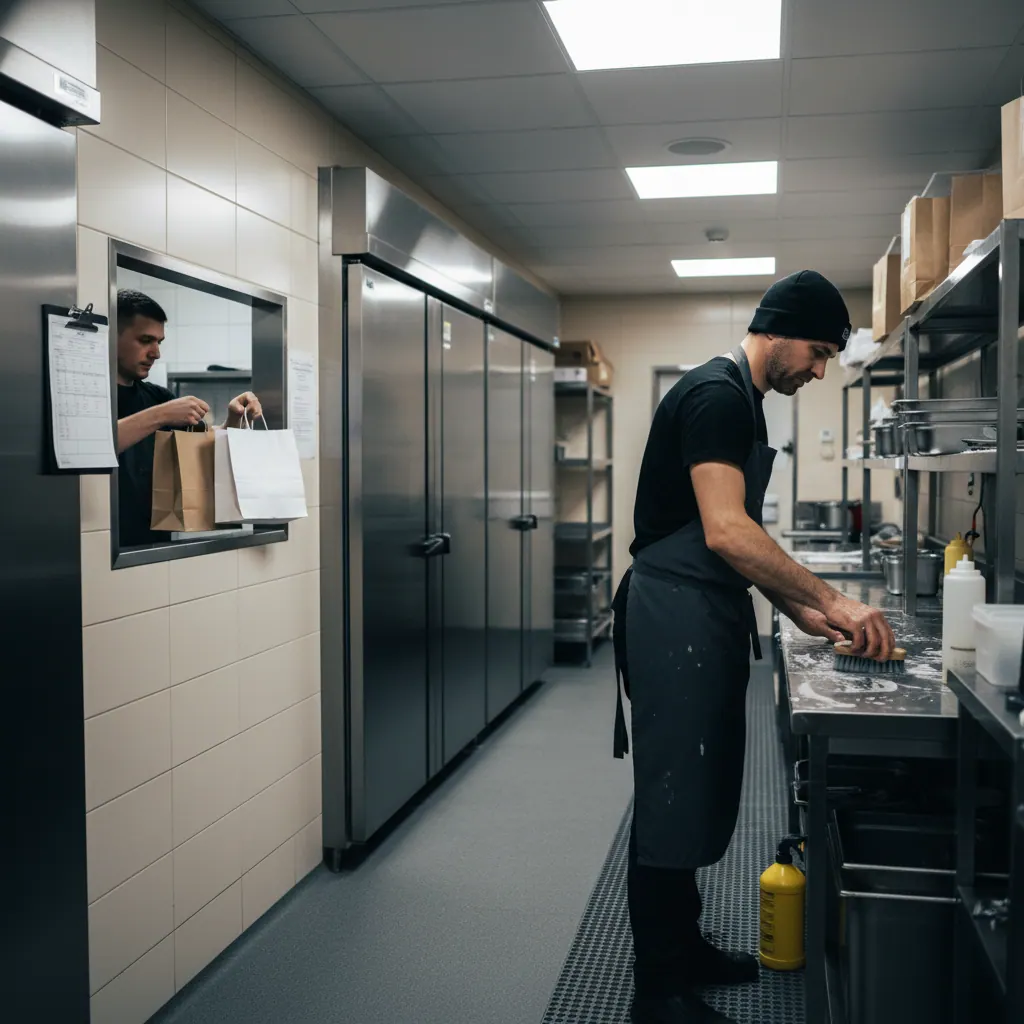
Dark kitchens (also called ghost kitchens or cloud kitchens) operate delivery-only — no front of house, no diners. They carry exactly the same EHO and TR19 compliance burden as a restaurant. They also have specific operational features that change how cleaning works in practice.
The compliance baseline
A dark kitchen is a commercial kitchen in EHO terms. Food Hygiene Rating applies. The Fire Safety Order 2005 applies. TR19 cleaning applies. The fact that customers never enter the premises makes no difference to any of this.
Operational differences that affect cleaning
- Multi-brand under one roof: many dark kitchens host 4–10 separate brands operating from a single physical kitchen, often with shared extract. Each brand has its own EHO registration, but the kitchen has one shared structure to clean.
- Tighter operating windows: dark kitchens often run 11am to 2am with peaks at lunch and dinner delivery. Cleaning windows are narrow — typically 02:00 to 05:00.
- Higher grease loading per m²: production density is higher than restaurant kitchens. A 60m² dark kitchen producing 800 dishes/day deposits grease faster than an equivalent restaurant.
- Shared extract systems: TR19 cleaning is an estate-wide job, not a per-tenant one. Tenants benefit from landlord-coordinated cleaning cycles.
The cleaning schedule we run
For a typical dark kitchen we recommend:
- Daily light-clean (counters, equipment exteriors, floors): in-house or contracted, 06:00 cycle.
- Weekly deep-clean of cookline equipment: contracted, 02:00–05:00 cycle.
- Quarterly full kitchen deep clean: contracted.
- TR19 extract cleaning every 3 months: landlord-coordinated where shared.
What landlords need to provide
If you operate from a dark-kitchen estate, your landlord should provide:
- Estate-wide TR19 cleaning certificates, with your specific kitchen identified on the schematic.
- Estate-wide pest control records.
- Access to a clear cleaning schedule with sign-off lines.
If your landlord is not delivering these, that is a procurement issue worth raising — the compliance gap falls on you, not on them.
See our commercial kitchen cleaning service.